
For years, much of digital strategy revolved around a fairly simple question: does my brand appear on the first page of Google? That question is starting to feel incomplete. More people are now beginning their research directly inside AI tools, which changes the moment when a brand enters or fails to enter the consideration process. When someone asks an LLM for the best provider in a category, they are unlikely to receive ten pages of links.
They will probably get a handful of recommendations. The 2026 numbers show how quickly this is moving: traditional search is expected to decline by 25% by the end of the year, ChatGPT reported 900 million weekly users in February, and according to Similarweb, 35% of consumers already use AI during product discovery, compared with 13.6% relying on traditional search. In many cases, the decision is starting to take shape before anyone visits a company website.
That is where GEO, Generative Engine Optimization, becomes relevant. But I think it is a mistake to treat it simply as a technical evolution of SEO. SEO was built around rankings, keywords and backlinks; GEO raises a different question: what makes a model consider a company relevant enough to include in an answer? Ahrefs found a 0.664 correlation between brand mentions and AI visibility, compared with 0.218 for backlinks.
Research from Princeton, Georgia Tech and IIT Delhi also found that distributing content across different publications can increase citations in generative answers by as much as 325% compared with keeping content only on a company’s own website. For those of us working in communications, there is something very familiar about this. A company can say plenty about itself, but authority is also built through what other people say about it.
In Latin America, this shift may be particularly important. According to Redegal’s 2026 report, AI adoption among consumers has reached 76% in Brazil and 70% in Mexico, both above the global average, while 74% of CMOs in the region have already moved part of their traditional SEO budgets toward generative engine initiatives.
At LatAm Intersect, we have spent years working with teams and local specialists across different countries, placing stories in media outlets that genuinely carry authority in each market. That model, also recognised when we received the PR Consultancy of the Year award in Davos, now has another layer of relevance.
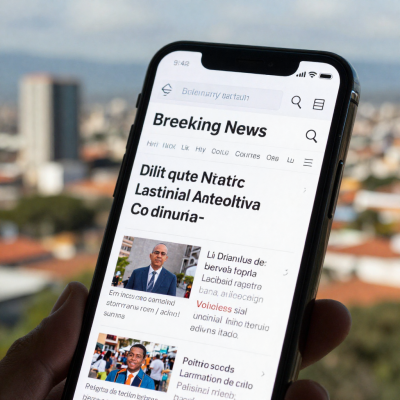
A mention in Valor Econômico, El Financiero or La Nación still matters for the same reasons it always has credibility, reputation and reach but it can also become part of the information that AI models find, associate with a company and potentially use later when forming a recommendation.
This is why I see three mistakes becoming increasingly costly:
- Handing GEO entirely to a technical agency
- Keeping most of a company’s knowledge inside its corporate blog
- Assuming that only major global publications matter
A brand can have an excellent website and a sophisticated SEO strategy and still remain almost invisible to an LLM if hardly anyone talks about it outside its own channels.
After years in which PR was often treated as secondary to performance marketing, SEO or social media, that dynamic is starting to change. What has always been central to public relations getting credible third parties to talk about a company with context and authority may also influence how AI models understand that brand. Ranking on the first page of Google still matters. But the next competition is making sure that, when someone asks the right question, your company is part of the answer.