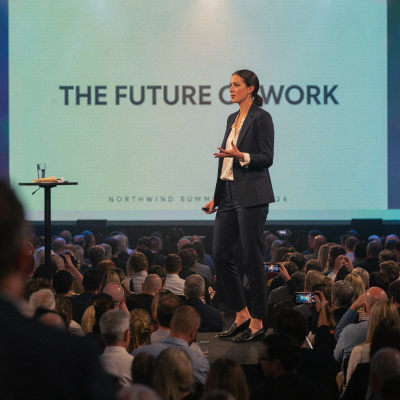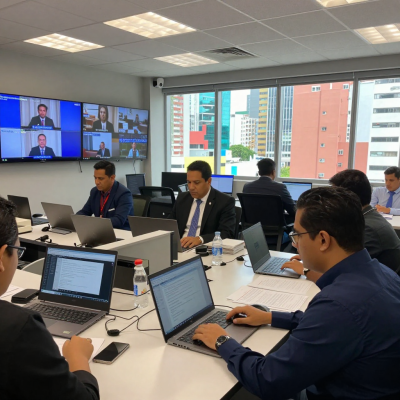

For years, companies have competed for visibility. Today, the competition is in the field of credibility.
In Latin America, where economic uncertainty, digital transformation, and information overload have elevated levels of skepticism, business leaders face a new challenge: demonstrating authority before selling a solution. Thought Leadership has become one of the most valuable strategic assets for CEOs, CMOs, and C-Level executives seeking to influence markets, build trust, and accelerate business decisions.
It is no longer enough for a company to have a good product or a creative campaign. Audiences — from consumers to corporate decision-makers — want to know the vision, experience, and leadership capacity of the people behind the brands.
If you are a global CMO, a VP of Marketing, or you lead the expansion of a company in Latin America, you have probably asked yourself more than once: why do campaigns that succeed in Europe or the United States deliver limited results in our region? The answer is simple: Latin America cannot be decoded with global templates. It is imperative to understand the profound shift that has taken place in how trust and influence are built in the Latin American market today.
The Key Finding: High Self-Confidence, Low Institutional Credibility
Latin American consumers fully trust their own ability to solve problems, research options, and adopt digital tools. However, at the same time, they maintain a historically low level of trust toward large institutions and toward traditional brand messages.
Interruption marketing and generic promises have lost effectiveness. Latin American consumers, in both B2C and B2B markets, have become more pragmatic, more informed, and far more selective. They are not looking for brands to speak louder; they seek brands that provide value, context, and evidence.
It is precisely here that Thought Leadership takes on strategic relevance. When an organization’s leaders share perspectives, analyses, learnings, and visions of the future that help interpret market reality, they generate something far more valuable than visibility: they build trust.
The B2B Imperative: Beyond Branding, a Structural Necessity
This shift is not exclusive to mass consumption. In fact, its impact is even more visible in the B2B ecosystem. In Latin America, corporate decisions often unfold in complex environments, with long sales cycles and multiple stakeholders involved. As a result, Thought Leadership has moved from an optional executive positioning tactic to a strategic necessity. A common mistake is failing to consider the audience: their preferences, aspirations, and behaviors. According to PRGN Influence Insights, 83% of Latin American companies consider cultural and social values crucial for brand influence — a rate far higher than North America (59%), and higher than EMEA — Europe, Middle East and Africa (73%) and APAC — Asia Pacific (71%).
A Strategic Partner That Understands the Region’s Codes
The difference between a conventional communications strategy and a real-impact influence strategy lies in the ability to understand the cultural, economic, and social nuances that shape trust in each market.
At LatAm Intersect, we work from an audience-based regional immersion methodology. Our approach combines cultural intelligence, trend analysis, and executive positioning to transform business leaders into industry references.
Establishing authority, building trust, and connecting humanly with your consumer and commercial allies in Latin America is no longer a task for algorithms, but one of empathy, coherence, and real leadership. Explore the topic further by downloading the e-book: Thought Leadership Trends 2026
FAQ
What is Thought Leadership and why is it important for business leaders in Latin America?
Thought Leadership is the capacity of an executive or company to influence industry conversations through relevant ideas, knowledge, and perspectives. In Latin America, where trust is built on relationships and credibility, Thought Leadership helps leaders strengthen their reputation, generate influence, and accelerate business opportunities.
How does Thought Leadership contribute to corporate reputation?
Corporate reputation is strengthened when an organization’s leaders are recognized as authoritative voices on topics relevant to their industry. A consistent Thought Leadership strategy increases the trust of clients, investors, employees, and media, generating a positive impact on brand perception.
What is the difference between Executive Branding and Thought Leadership?
Executive Branding focuses on building and enhancing the personal brand and visibility of a leader. Thought Leadership goes a step further: it seeks to position them as an intellectual and strategic reference within their sector. The most successful organizations combine both disciplines to generate sustainable influence and long-term credibility.
Why is Thought Leadership key for B2B companies in Latin America?
B2B purchasing processes in Latin America tend to be complex and based on trust relationships. When business leaders share relevant knowledge and demonstrate market expertise, they help reduce the perceived risk of decision-makers and strengthen commercial opportunities.
How to develop an effective C-Level Communications strategy?
An effective C-Level Communications strategy must align the business vision with the conversations that impact the industry. This includes defining positioning territories, generating valuable content, strengthening presence in media and professional platforms, and actively participating in strategic debates where business decisions are made.
How does LatAm Intersect help position business leaders in Latin America?
LatAm Intersect develops Thought Leadership strategies based on audience intelligence, cultural analysis, trend research, and executive positioning. Our regional approach and expertise helps CEOs, CMOs, and corporate leaders build authority, strengthen their reputation, and become industry references in the main markets of Latin America.