After technical negotiators delivered a series of texts, the focus now shifts to the political agenda with high-level meetings on the horizon
By: Alice Martins Morais
Edited by: Ricardo Garcia | Reviewed by: Samantha Mendes.
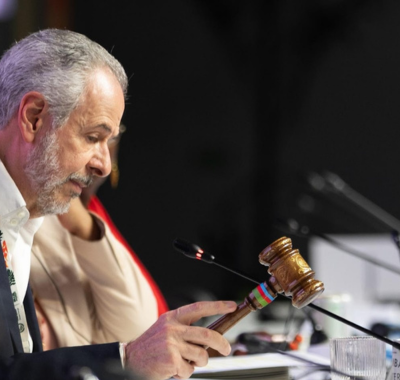
COP30 enters its second week with a change of pace. After days of technical negotiations, draft texts on the various topics on the agenda were submitted by Saturday (15), and from now on, the spotlight turns to the political arena: it is now the turn of ministers and high-level representatives to begin working directly on these documents, which are expected to evolve over the coming days until final decisions are reached.
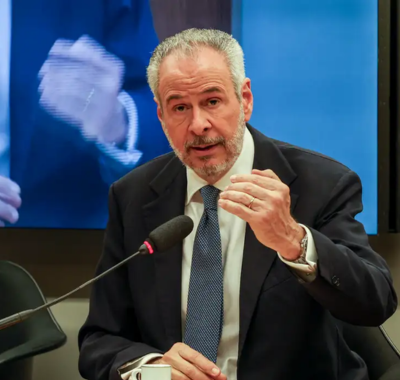
“We passed the second test today, the transition to the second week with continuous work,” said Ambassador Liliam Chagas at a press conference. The texts that have been forwarded for completion mean that they are technically mature enough to enter the political phase of deliberation, even if they present notable divergences. The main topic is adaptation, where there are distinct positions among countries regarding the so-called adaptation indicators. In general terms, these are metrics that must be defined to monitor the progress of actions to reduce exposure and vulnerability to the impacts of climate change.
Starting today (17), the conference presidency will appoint ministers responsible for conducting high-level negotiations. The heads of delegation and ministers of Climate and Environment from the countries begin to arrive in Belém with speeches scheduled for Monday and Tuesday. There will be five intense days to try to finalize the texts by Friday (21). However, in the history of UN climate conferences, the deadline has only been met six times. Usually, it goes over by a day, and sometimes more.
This week’s major topics
Last week, countries discussed their views on three main topics:
- The 10th anniversary of the Paris Agreement
- Negotiations on the implementation and political cycle of the Paris Agreement
- The need to respond to climate emergencies, especially those faced by vulnerable countries (LDCs)
These three axes will be the guiding principle for political decisions. To move forward, it will be necessary to ”have a spirit of cooperation,” said COP President André Corrêa do Lago, considering that there are pending issues that still require strong coordination between groups.
Financial issues and the Baku–Belém Roadmap
There are two roadmaps being discussed simultaneously. One of them, “Baku-Belém to 1.3T,” aims to chart a course for the world to reach $1.3 trillion in financing for developing countries to combat climate change. Corrêa do Lago described Saturday’s latest debate on this topic as intensive, constructive, and rich in contributions. According to him, the roadmap does not need to be formally approved, but it is a key document, as it will present a consolidated vision of the path to 2026.
Corrêa do Lago assesses that most of the points raised by the negotiators have been addressed. Even so, there is consensus that more data is needed—and, therefore, a group of experts should be created to support this process. The idea is to hold three technical meetings with experts in early 2026, with the expectation of producing a report by October of that same year.
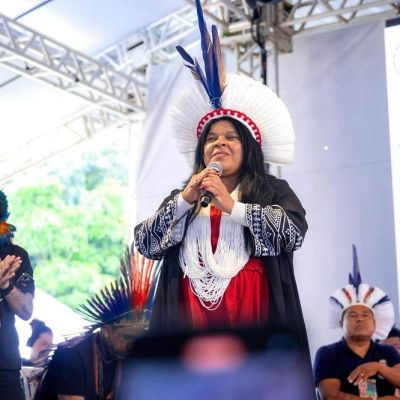
Another roadmap currently in progress aims to accelerate the transition away from fossil fuels. The initiative was convened by President Lula at the Leaders’ Summit on November 6 and 7. It is a thorny issue. When asked about the progress of this debate, the COP30 president grimaced and joked, “I was so happy to talk about the other roadmap.” Ana Toni, CEO of COP, reported that there were several meetings on this topic on Saturday, led by the Beyond Oil and Gas Alliance (BOGA) — an initiative led by Costa Rica and Denmark. “It is up to the parties if they want to discuss this in the negotiations in another way,” she added.
With the arrival of the ministers and the pressure of the calendar, the second week will be decisive. The coming days will determine whether the nearly 200 countries represented in Belém will be able to produce a set of robust decisions on mitigation, adaptation, markets, financing, and implementation of the Paris Agreement, or whether the disagreements will lead the processes being pushed into the future.
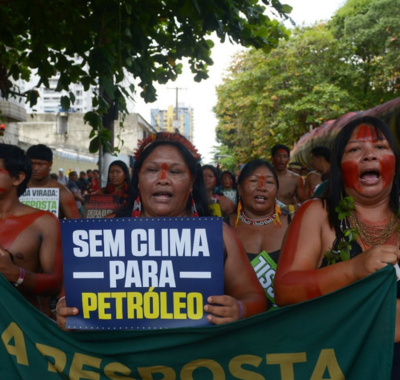
Fair transition still far from reality in the Amazon
Another topic that should continue to feature in political discourse is that of fair transition, which is also advancing in parallel in civil society events. For Lise Tupiassu, Dean of International Relations at the Federal University of Pará, although the debate has broadened, the discussion still lacks the depth necessary to reflect the concrete challenges of the Amazon: “This issue has been addressed and is attracting increasing attention. I dare say, however, that it still falls a little short of the real problems of the territory,” she says.
One of the examples pointed out by Lise Tupiassu is the region’s energy poverty, where one million people still do not have permanent access to electricity. “We have one of the regions that produces the most clean energy, and we have Amazonian populations that depend on isolated systems powered by fossil fuels. When we talk about energy transition, we don’t always focus on providing energy security to the most vulnerable populations,“ she criticizes. For this reason, the researcher calls on negotiators to take a ”socio-ecological view of energy transition” when addressing the issue this week.
—
This report was produced by Amazônia Vox, through the Collaborative Socio-environmental Coverage of COP 30. Read the original report at: https://www.amazoniavox.com/noticias/view/510/segunda_semana_da_cop30_comecou_o_que_vem_por_ai