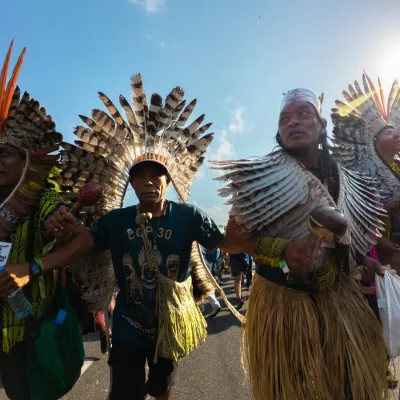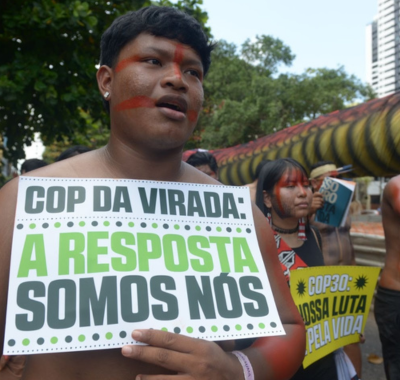
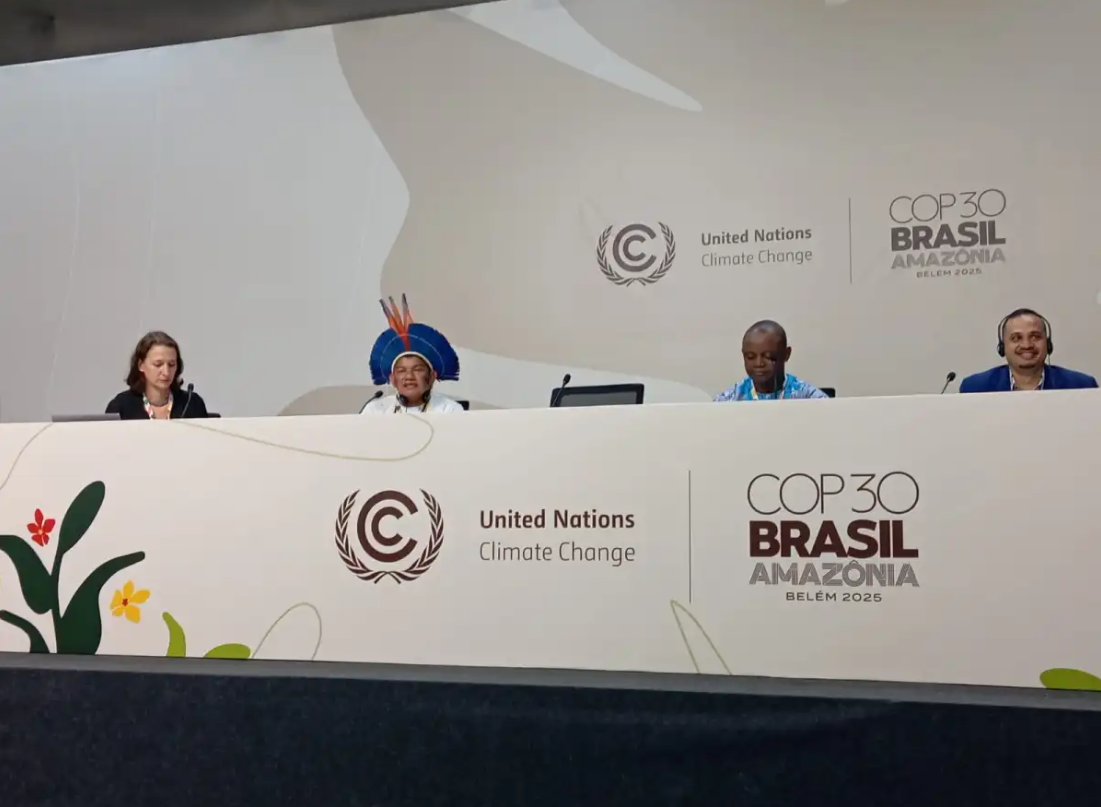
The proposal was a contribution from indigenous populations to the climate discussion during meetings of the Just Transition Work Program.
Author: Fábio Bispo
Translation: Roberto Cataldo/Verso Tradutores
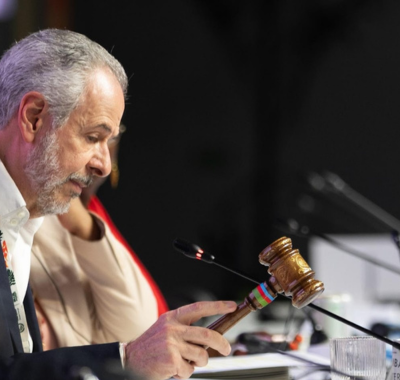
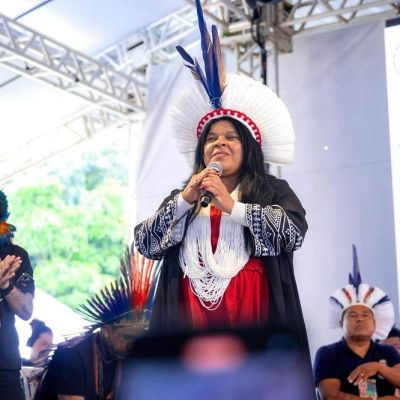
André Correa do Lago, Sonia Guajajara and Marina Silva attend a meeting with people from Indigenous Peoples at COP30. Photo: Hermes Caruzo/COP30
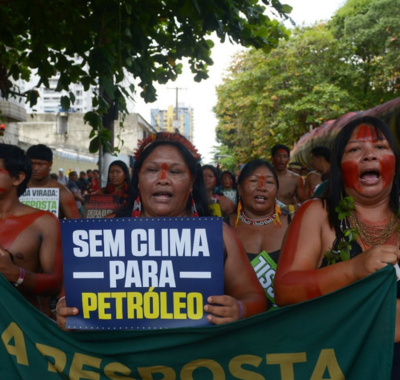
Climate negotiations at COP30, in Belém, advanced this Friday (14) with the Indigenous Caucus’s presentation of a proposal to create oil, natural gas and mining-free zones in areas inhabited by isolated or recently contacted Indigenous Peoples. The idea started circulating in the debates of the Just Transition Work Program (JTWP) created at COP28, as a contribution from the indigenous delegation.
The proposal still appears in brackets on the document, which means that it is under dispute. Nevertheless, the fact that it has been formally registered is a significant advance in the international discussion on protection of extremely vulnerable groups from the expansion of oil, gas, and critical mineral frontiers necessary for the energy transition.
“We see the inclusion of this topic in the negotiations as a great victory for this COP. There is a consensus that isolated or recently contacted peoples cannot be consulted, and that no one can speak for them,” says Gisela Hurtado, Senior Amazonia Campaigner at Stand.earth, who is following the discussions on just transition at the conference.
The organization has been working to raise awareness among the convention’s member countries to expand these exclusion zones, also including environmentally sensitive regions such as tropical forests.
“The areas we want to protect are the most environmentally sensitive ones. We want the entire Amazon to be excluded from extractive activities, but I don’t see this discussion taking place at this COP,” she said.
The point about isolated peoples appears in three different parts of paragraph 12 of the draft decision, explicitly recognizing the rights of Indigenous Peoples in voluntary isolation and initial contact. The excerpt states that their protection requires the creation of exclusion zones based on the precautionary and non-contact principles:
“[…] protections for Indigenous peoples in voluntary isolation and initial contact through the establishment of exclusion zones, consistent with the principles of precaution and non-contact,” says the draft decision.
The proposal came from contributions made by the Indigenous Caucus. It was gathered from traditional peoples’ movements, especially those in the Amazon.
The disputed sections should be negotiated over the next week, when countries begin the process of “cleaning up” the text and eliminating the brackets. The definitive inclusion or exclusion of the proposal will depend on intense political networking and the willingness of major fossil fuel producers to accept explicit limits to the expansion of their exploration frontiers.
21% of tropical forests are reserved for fossil fuel exploration
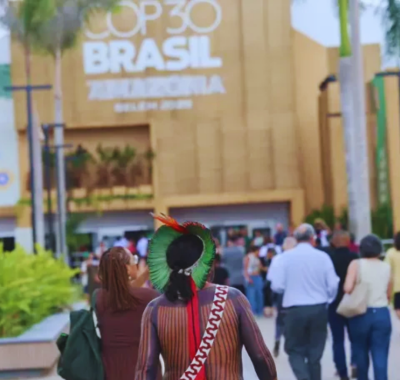
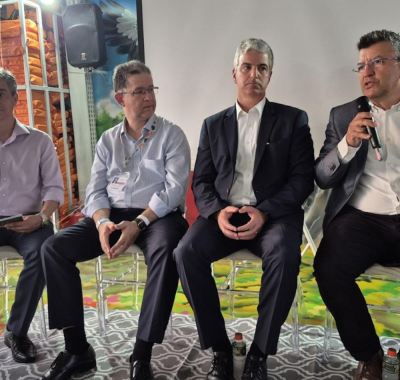
On the afternoon of this Friday (14), Stand.earth presented new data on oil and gas exploration in tropical forests of South America, Africa and Asia, during a conference at the Blue Zone – where formal COP30 negotiations take place.
According to the organization, 183 million hectares of tropical forests around the world are already reserved for oil and gas exploration – 21% of all existing tropical forests. The most critical situation is in Africa, where 40% of the Congo Basin forest overlaps oil blocks. In Southeast Asia, 22% of the forests are committed to the fossil fuel industry, while in the Amazon, that rate is 14%.
During the panel, Chief Jonas Mura, an indigenous leader from Brazil’s Amazonas state, denounced the pressure from the gas industry on the territories of the Mura Indigenous People, especially Eneva’s advance in the Azulão Field.
Since the company began exploring natural gas in the Azulão Field, the Mura have reported water contamination, animals fleeing, and the loss of conditions for fishing and hunting that sustain their way of life. They also question the lack of prior, free, and informed consultation – a right guaranteed by ILO Convention 169 – and claim that the State allowed the company to proceed without presenting the legally required environmental impact studies at the beginning of the licensing process.
“They are extracting natural gas from a territory that is ours, that is sacred,” said Mura. “We are running out of drinking water, out of fish, we are losing our Amazon, which is being destroyed for exploration in indigenous lands,” the indigenous leader added.
Chief Jonas Mura denounced gas exploration in Amazonian territory. Photo: Fábio Bispo
Colombia is the first country to create an oil-free zone in the Amazon
During COP30 in Belém, Colombia announced that it has become the first Amazonian country to declare its entire portion of the biome as an oil and mining-free zone, setting an unprecedented barrier to the expansion of extractive frontiers in the region. The decision, presented by Environment Minister Irene Vélez Torres at an OTCA meeting, turns more than 48 million hectares – 42% of Colombia’s continental territory – into an area reserved exclusively for the protection of renewable natural resources.
The Colombian government presented the measure as an “act of environmental sovereignty” and an invitation for other Amazonian countries to follow suit. In proposing an “Amazonian alliance for life,” Vélez Torres emphasized that the forest does not recognize borders and that its protection requires coordinated actions, strengthening the energy transition agenda of the Gustavo Petro government and increasing pressure on countries that continue to authorize new oil and mining exploration fronts in the Amazon.
—
This report was produced by InfoAmazonia through the Collaborative Socio-environmental Coverage of COP 30. Read the original report here.